Choosing the right supplier from China’s top 10 aluminum parts manufacturers requires more than comparing online rankings. This guide examines practical evidence from aluminum parts manufacturing, including machining accuracy, casting quality, surface finishing, and production consistency. It considers CNC milling, turning, extrusion, forging, and die casting capabilities. It also reviews inspection equipment, material traceability, engineering support, and communication during sampling and mass production.
Details matter.
A reliable manufacturer should explain alloy grades, dimensional tolerances, tooling costs, and realistic delivery schedules. Look for measurable quality controls, such as coordinate measuring machines, first-article inspection, and documented process checks. Certifications can support credibility, but they should not replace factory audits or sample testing. A clean workshop, labeled material racks, and sealed cartons often reveal more than polished marketing photographs. This selection aims to help buyers compare experience, technical depth, export reliability, and customer support across different supplier types. However, “top” is not absolute. Rankings may change with order volume, product complexity, region, and required certification. Some manufacturers excel at large structural profiles but perform poorly on tiny precision components. Others offer attractive prices but need stronger engineering communication. That difference deserves careful reflection before signing a contract. Readers should verify current capabilities directly, request recent samples, and confirm quality requirements in writing. The strongest partnership is not always the cheapest option. It is the supplier that can repeatedly deliver the required part, finish, documentation, and timing.
China’s scale matters, but scale alone does not prove manufacturing excellence. The U.S. Geological Survey reported about 41 million metric tons of primary aluminum production in China during 2023. That represented roughly 59% of global output. However, aluminum parts require more than abundant metal. They demand stable alloys, accurate machining, controlled heat treatment, and documented inspection.
Its engineers should understand casting porosity, tool wear, distortion, and surface finishing. Factory experience becomes visible in practical details: calibrated CMM equipment, traceable material certificates, controlled furnace records, and inspection reports linked to each batch. The International Aluminium Institute reported global primary aluminum production above 70 million tonnes in 2023. That figure highlights the importance of responsible material planning and recycling practices.
Buyers should request capability studies, sample measurements, process-control records, and corrective-action reports. A supplier that openly discusses previous failures may be more reliable than one claiming zero problems. No factory is perfect. Even strong processes need review when designs change, tolerances tighten, or volumes increase. Price remains important, but an inexpensive component with hidden porosity can create costly field failures. A serious manufacturer therefore explains risks before accepting the purchase order.
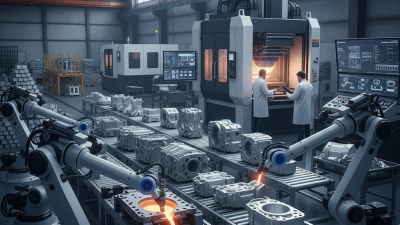
Choosing among China’s top aluminum parts manufacturers requires more than comparing website photos and quoted prices. Experienced buyers should inspect machining capacity, alloy control, dimensional tolerance, and finishing quality. Ask whether the supplier can provide material certificates, inspection records, and measurable process data. A reliable manufacturer should explain its equipment, quality checkpoints, and correction procedures clearly.
Samples reveal details that brochures often hide. Check thread accuracy, edge condition, anodizing consistency, and surface marks under normal light. Review a first-article inspection report before approving volume production. Communication also matters. Clear drawings, realistic lead times, and documented engineering changes reduce avoidable mistakes. A supplier with disciplined traceability can identify the material batch, operator, and inspection result. That evidence supports accountability.
Tips: Request three sample parts, not one. Compare actual tolerances with the drawing. Ask for a small pilot order before full production. Evaluate packaging, response speed, and problem handling too. The cheapest offer may create expensive rework. Sometimes, even a capable factory misses a minor cosmetic requirement because the specification was vague. That is partly the buyer’s responsibility. State critical surfaces, acceptable marks, inspection tools, and packaging expectations in writing. A thoughtful audit, including a production-floor visit or independent inspection, gives stronger evidence than a polished presentation. Don’t rely on promises alone.
This neutral procurement model ranks the main criteria used to screen aluminum parts suppliers for a top-ten shortlist. Quality systems, dimensional capability, material traceability, delivery reliability, and total cost are especially important for production sourcing. The percentages represent evaluation weights rather than performance scores for any named company.
China’s top ten aluminum parts manufacturers are best compared by core capabilities, not advertising claims. A practical evaluation should examine die casting, CNC machining, extrusion, stamping, and precision finishing. Strong suppliers control critical dimensions with calibrated gauges and coordinate measuring machines. They also maintain traceable material certificates from billet or ingot to shipment.
The leading manufacturers usually serve different production needs. Some specialize in thin-wall die-cast housings for electronics and industrial controls. Others produce tight-tolerance CNC parts with five-axis machining and stable fixture design. Several focus on complex extrusions, using carefully designed dies to reduce distortion and surface marks. Additional strengths include anodizing, powder coating, heat treatment, deburring, and automated inspection. Tooling speed matters, but tool life matters more.
Factory experience becomes visible during sampling. Engineers should review first-article reports, surface photographs, inspection records, and packaging tests. A capable partner can explain why a corner cracks, why a hole shifts, or why anodizing changes color between batches. That detail builds trust. Still, no manufacturer excels at everything. A supplier may offer excellent machining but weak finishing control. Another may promise fast delivery yet struggle with engineering changes. These limitations deserve honest discussion before volume production begins. Small pilot orders can expose them early. Perfect rankings are unlikely, and that assumption needs testing.
China’s top ten aluminum parts manufacturers should be judged by process control, not production volume alone. A capable factory may combine die casting, CNC machining, extrusion, and precision forging. Each method fits different needs. Die casting suits complex housings and high-volume production. CNC machining delivers tight tolerances for shafts, brackets, and robot joints. Extrusion creates lightweight profiles with consistent sections.
Quality begins with verified aluminum grades and controlled melting records. Inspectors should review chemical composition, hardness, dimensions, and surface condition. Coordinate measuring machines can check hole positions within small tolerances. First-article inspection, statistical process control, and traceability improve confidence. ISO 9001 certification is useful, but its scope must be confirmed. It does not guarantee perfect parts. An honest supplier also explains rejected batches, corrective actions, and inspection limits.
Finishing affects performance and appearance. Anodizing can improve corrosion resistance, while powder coating adds color and protection. Deburring remains important. A sharp edge can damage wiring or injure an operator. Aluminum parts support vehicles, automation equipment, electronics, medical devices, and renewable-energy systems. Engineers should match alloy, heat treatment, tolerance, and finish to the application. A lightweight bracket may need less machining but stronger fatigue testing. No factory is flawless. Even a detailed checklist can miss distortion after heat treatment or coating thickness variation. Reliable evaluation requires samples, drawings, test reports, and direct technical questions.
| Rank | Manufacturer Profile | Primary Manufacturing Processes | Typical Aluminum Alloys | Applicable Quality Standards | Typical Dimensional Capability | Common Surface Treatments | Representative Industry Applications | Key Capability Indicator |
|---|---|---|---|---|---|---|---|---|
| 1 | High-Pressure Die-Casting Profile | High-pressure die casting, trimming, CNC machining, leak testing | A380, ADC12, AlSi9Cu3 and equivalent pressure-casting alloys | ISO 9001; IATF 16949 where automotive supply is involved; ISO 14001 for environmental management | As-cast tolerance commonly follows ISO 8062-3; tighter features require secondary machining | Shot blasting, powder coating, anodizing on suitable alloys, chromate conversion | Automotive housings, motor components, gearbox covers, electronic enclosures | Efficient for complex, thin-wall parts produced in medium-to-high volumes |
| 2 | Precision CNC Machining Profile | Three-, four- and five-axis CNC milling, CNC turning, drilling, tapping | 6061-T6, 6063-T5, 6082-T6, 7075-T6 | ISO 9001; ISO 2768 for general tolerances; ASME Y14.5 for GD&T-based drawings | About ±0.01 to ±0.05 mm is commonly achievable depending on geometry, equipment and inspection method | Clear or hard anodizing, electroless nickel, powder coating, brushing and polishing | Robotics, aerospace fixtures, medical equipment, automation systems and high-precision machinery | Suitable for prototypes, low-volume production and parts with critical machined features |
| 3 | Aluminum Extrusion and Secondary-Machining Profile | Billet extrusion, stretching, cutting, CNC machining and assembly | 6063-T5, 6061-T6, 6005A-T6, 6082-T6 | ISO 9001; EN 755 and EN 12020 for relevant extrusion dimensions and tolerances | Extrusion tolerances depend on profile size and complexity; machined holes and faces provide tighter control | Anodizing, powder coating, electrophoretic coating and mill finish | LED frames, heat sinks, window systems, machine frames, solar mounting structures | Strong material utilization and repeatability for constant cross-section components |
| 4 | Aluminum Forging Profile | Closed-die forging, open-die forging, heat treatment, trimming and CNC finishing | 6061-T6, 6082-T6, 7075-T6, 2014-T6 | ISO 9001; AMS specifications may apply to aerospace-related materials and processes; NADCAP may be required for certain special processes | Forged dimensions generally require machining for precision interfaces and close tolerances | Anodizing, conversion coating, shot peening, polishing and protective coating | Aircraft fittings, suspension parts, bicycle components, industrial levers and structural brackets | High strength-to-weight ratio and favorable grain flow for load-bearing components |
| 5 | Gravity and Low-Pressure Casting Profile | Permanent-mold casting, low-pressure casting, heat treatment and CNC machining | A356, A357, AlSi7Mg and other heat-treatable casting alloys | ISO 9001; ISO 8062 for casting tolerances; ASTM or EN material specifications as defined by the drawing | Generally more stable than sand casting; precision improves after machining and dimensional inspection | Shot blasting, powder coating, painting, anodizing where alloy composition permits | Pump bodies, valve bodies, electric motor housings, vehicle wheels and structural castings | Well suited to thicker sections, sound castings and medium-volume production |
| 6 | Sheet-Metal Fabrication Profile | Laser cutting, CNC punching, bending, riveting, welding and assembly | 5052-H32, 5083-H111, 6061-T6 and 3003-H14 | ISO 9001; ISO 2768 for general tolerances; ISO 3834 may apply to quality-controlled fusion welding | Laser-cut and formed accuracy depends on sheet thickness, bend radius, tooling and process sequence | Powder coating, wet painting, anodizing, brushing and protective film application | Electrical cabinets, control panels, HVAC components, transportation interiors and machine guards | Flexible for short lead times, welded assemblies and customized enclosures |
| 7 | Aluminum Profile and Modular-Assembly Profile | Extrusion, precision cutting, drilling, tapping, slotting and modular assembly | 6063-T5 and 6061-T6 are widely used for structural profiles | ISO 9001; EN 755 or EN 12020 for extrusion requirements; ISO 2768 for fabricated assemblies where applicable | Profile straightness, twist and cut length are controlled according to section geometry and specified standards | Anodizing, powder coating and electrophoretic coating | Factory automation frames, cleanroom structures, workstations, conveyor systems and machine bases | Fast assembly and reconfiguration with minimal welding or specialized tooling |
| 8 | Aluminum Heat-Sink Profile | Extrusion, skiving, cold forging, CNC machining, fin trimming and thermal testing | 6063-T5, 6061-T6 and thermally conductive extrusion grades | ISO 9001; material and dimensional requirements are verified against the engineering drawing and thermal specification | Fin height, fin pitch, flatness and mounting-hole location are controlled according to thermal design requirements | Anodizing, chemical conversion, black coating and controlled surface roughness treatments | LED lighting, power electronics, telecommunications, servers, inverters and battery systems | Performance is evaluated by thermal resistance, contact flatness and airflow compatibility |
| 9 | Aluminum Welding and Fabricated-Assembly Profile | MIG welding, TIG welding, friction stir welding, cutting, forming and pressure testing | 5052, 5083, 6061 and 6082 series alloys, selected according to weldability and strength | ISO 9001; ISO 3834 for welding quality; ISO 9606-2 for aluminum welder qualification where required | Weld distortion and heat-affected zones require fixtures, sequence control and post-weld machining when necessary | Cleaning, conversion coating, powder coating, painting and anodizing of compatible components | Marine structures, tanks, frames, transportation equipment, industrial platforms and pressure-related assemblies | Capable of producing large or integrated structures that cannot be made economically from one casting |
| 10 | Prototype and Low-Volume Aluminum Parts Profile | CNC machining, soft tooling, rapid casting, additive manufacturing patterns and small-batch finishing | 6061-T6, 7075-T6, 5052, A356 and other application-specific grades | ISO 9001; first-article inspection, material certificates and inspection reports are commonly used for project verification | Capability is defined by the selected process; CNC-machined features generally provide the highest dimensional accuracy | Anodizing, bead blasting, powder coating, painting, polishing and laser marking | Product development, laboratory equipment, custom robotics, testing fixtures and pre-production validation | Emphasizes rapid design feedback, engineering changes and flexible batch sizes |
Selecting among China’s top 10 aluminum parts manufacturers requires more than comparing website rankings. The U.S. Geological Survey reported approximately 41 million metric tons of Chinese primary aluminum production in 2023. That capacity is impressive, but it does not guarantee precise machining or stable quality. Ask for recent inspection records, equipment lists, alloy traceability, and samples made from your actual drawings.
Review the complete manufacturing route. Can the supplier handle casting, extrusion, CNC machining, anodizing, and final assembly? Request dimensional reports using calibrated equipment, not simple photographs. For automotive work, verify relevant IATF 16949 controls; aerospace projects may require AS9100 systems. ISO 9001 certification helps, but certificates alone are insufficient. Audit corrective-action records and inspect how rejected parts are isolated.
Cost can mislead.
The International Aluminium Institute expects global aluminum demand to grow substantially by 2050, increasing pressure on energy, material availability, and recycling systems. Ask how the manufacturer controls alloy substitutions, scrap content, packaging damage, and delivery changes. A written agreement should define tolerances, surface defects, sampling levels, tooling ownership, and payment milestones. Video audits are useful, though they cannot replace an on-site visit. I have seen attractive quotations fail after unclear anodizing requirements. That is the uncomfortable lesson: select the supplier with the strongest evidence, not merely the lowest price or highest search ranking.